Services
Early History
Information about Early History
-

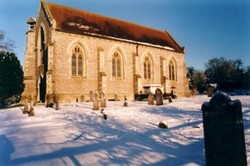
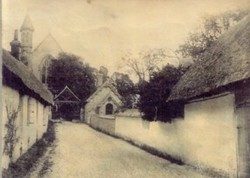
Cholderton Church A summary of the church history and architecture can be found on the church page. Illustrations of this and the earlier church appear in the Church photo gallery -

St Nicholas Lane 1897 AD -

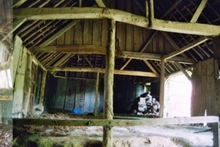
Later History Most of the buildings still standing in the village date from 17th century or later. Several houses are constructed in the traditional flint and chalk cob and include both small cottages such as Dolly's Cottage in Church Lane and more grandiose buildings such as The Old Rectory and Holly Tree House. Others such as Cholderton House, built in 1690 were constructed in flint with red brick dressings, whilst others are entirely in brick. Most are roofed with tile, though a few buildings have thatch. Timber framed buildings are rare, being mostly barns or former barns. If you have historical queries the Bourne Valley Historical Society may be able to help you.
The village is recorded in Domesday Book and the name has been recorded in various forms including Cheldreton, Cheldrington and Choldrington. The estate of Cholderton manor was held in 1086 by William of Eu. Other estates in Cholderton originated in small estates held in 1066 by Alwin, Ulvric, Sewi and Ulward and in 1086 Ernulf of Hesdin owned all of them. Some of the estates owned by Ernulf and his successors apparently merged to form Lower Farm. Eventually in 1893 it was sold to Henry Stephens and incorporated into the Cholderton Estate.
Other estates held by Ernulf of Hesdin were possibly the origin of the Cholderton House estate. The land was held by Mottisfont Abbey at the time of the Dissolution.
In 1086 the four estates at Cholderton had land for 5.5 plough teams and there were 36 square furlongs of pasture, but neither meadow nor woodland.
Cholderton’s assessment for taxation in 1332-4 showed it as relatively prosperous and in 1377 there were 46 poll tax payers. Tax assessments of the 16th and earlier 17th centuries indicate moderate prosperity.
The early village may originally have focused on the church and earthworks in the field to the north of the church have the appearance of house platforms of a medieval village.
Our Services
- About Cholderton
- Activities
- Amenities
- Booking Form For Village Hall
- Bourne Valley Magazine
- Cholderton & District Water Company
- Church History
- Defibrillators
- Employment
- Gallery
- Local Businesses
- Newspaper Cuttings from the 1800’s
- Notes on the Village History
- Regular Events and Notices
- The church and church life
- The Village Hall
- The Village School
- Village Calendar